Multigenerational Workplace Isn’t a Trend. It’s a Necessity
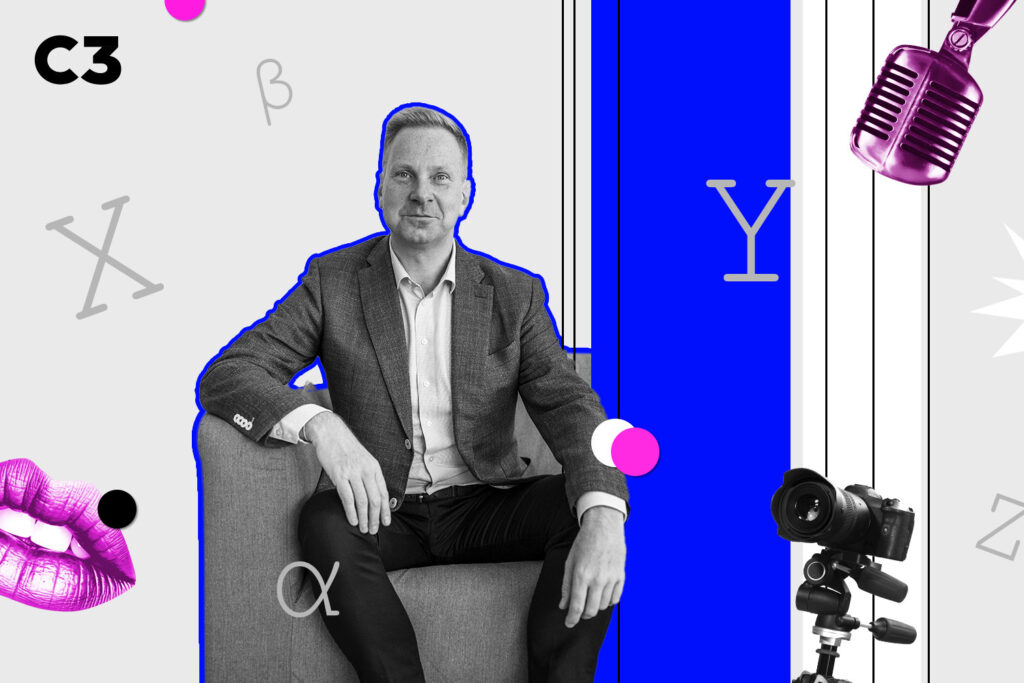
“Generational differences have always existed, but today the divide is enormous. Even a five-year age gap can make it difficult for people to understand each other. We need to find a way to bridge that gap,” says Martin Záklasník, mentor and founder of the Sinlei Institute.
“Dad, what do ‘melouch’ and ‘vekslák’ mean?” Martin Záklasník, an experienced leader and mentor, was once asked by his 14-year-old son, David. So Martin started explaining these terms from the Czech communist era. But the lesson didn’t end there. “I realized this was a great opportunity for David to teach me a few things from his world in return,” Martin recalls. And off they went: Brainrot, Ballerina Cappuccina, Tralalero Tralala… “I learned more TikTok memes than ever before!”
It’s an amusing story, but one with a deeper message. It shows us how we can better understand other generations, both at home and in the workplace. “You need to keep an open mind, be willing to learn, avoid falling into stereotypes, and stop looking down on people from other generations,” says Martin Záklasník. This mindset not only helps you better navigate the world around you but also brings more practical benefits when it comes to understanding the needs and lifestyles of different age groups. “If companies want to understand their customers, they need to employ people from different generations and understand their needs. A multigenerational workplace isn’t a trend. It’s a necessity.”
Why has the multigenerational workplace suddenly become such a hot topic? After all, age differences in the workplace have always existed.
It was a topic in the past, too. I even have an archival video from the 1980s, when Ronald Reagan was running for reelection as president. His opponent, Walter Mondale, was 17 years younger – Mondale was 56 at the time, while Reagan was 73. Reagan joked about Mondale’s lack of experience. But despite the nearly 20-year age gap, the two still had a similar experience of the world. Today, though? Two people just five years apart often see each other as belonging to different generations. The generational divide is now wider than at any other point in human history.
What caused this divide?
Technology, above all. It’s not just the tools that are changing, but also the ways we communicate, think, and learn. Tried-and-tested approaches that used to work are no longer effective. Let me give you an example. My first boss used to say, “Hire people with mortgages – they’ll do as they’re told.” But that’s no longer relevant to Gen Z. Some don’t want a mortgage, while others simply can’t afford one. In other words, methods that worked with Generation X or Millennials are losing their effectiveness. Yet it’s becoming increasingly important for companies not only to attract young talent but also to retain older employees. Demographics are unforgiving. Just look at the population trends, and it’s clear that retiring workers will never be fully replaced by Generation Z. There simply aren’t enough of them.
How are generations classified today?
Baby Boomers (born approximately 1946–1964)
- Grew up after World War II.
- Typical values: stability, a strong work ethic, and loyalty.
- Many are now retired or approaching retirement.
Generation X (born approximately 1965–1980)
- Grew up without digital technology but witnessed its rise.
- Typical values: independence, pragmatism, and work-life balance.
- Often the parents of Millennials.
Millennials / Generation Y (born approximately 1981–1996)
- The first generation to come of age in a digital world.
- Typical values: flexibility, personal development, and social responsibility.
- Strongly influenced by globalization and social media.
Generation Z (born approximately 1997–2012)
- Grew up with smartphones and the internet.
- Typical values: authenticity, diversity, speed, and multitasking.
- Highly tech-savvy, with a preference for visual content and short-form formats.
Generation Alpha (born approximately 2013–2024)
- Children of Millennials and the first fully digital generation.
- Growing up surrounded by smart devices, artificial intelligence, and algorithms.
- Their values are still largely a matter of speculation, but they are expected to be strongly influenced by the climate crisis, technology, and hybrid learning.
Generace Beta (born approximately 2025)
It is expected that:
- Full immersion in a world of artificial intelligence, automation, and digital interfaces.
- Greater emphasis on sustainability and the ethical use of technology.
- Widespread adoption of hybrid models of education and work.
- Questions surrounding identity and reality in a world connected to the metaverse.
What exactly does an aging population mean for companies? How will it change the makeup of teams?
We’ll need to bring together people from Generations X, Y, and Z, with Generations Alpha and Beta eventually joining the workforce as well. But many companies still think generational management is simply about figuring out how to deal with “young people”. That’s not enough.
So focusing on Gen Z alone isn’t enough?
Absolutely. The challenge for companies today isn’t just about attracting and retaining Gen Z employees. It’s equally important to keep Generations X and Y motivated. We need all of them. It’s not about keeping just one generation happy, but about making sure they all work well together. That’s where some companies get it wrong – they focus exclusively on younger employees, forgetting that diversity means bringing different people together, not replacing one group with another.
You’ve held leadership positions at E.ON and other major companies. Were you successful in maintaining cohesion across generations?
To be honest, I learned mostly from screwing things up. I think that’s the best way to grow. But that alone isn’t enough. Self-reflection is essential. So my formula is simple: screwup + self-reflection = growth. I was lucky enough to always work in environments where learning from mistakes was nothing to be ashamed of.
What was the most important lesson you learned from those mistakes?
That when people from different generations don’t understand each other, it’s not because one of them is out of touch. It’s simply because they’re different. And they’re different because they grew up in a different time, in a different context. If we don’t understand that, we’ll just keep judging each other by our own standards.
How can we better understand these differences between people?
It helps to recognize what has shaped us. Psychologists say – and my own experience confirms this – that our teenage years are particularly important. At that age, we’re already capable of thinking for ourselves, but we’re still developing our worldview. What we experience during those years has a profound impact on our values and our approach to work.

The most important thing is to make sure older generations don’t start feeling irrelevant. That would be a mistake.
So, to understand each other, do we need to revisit our own teenage years?
Absolutely. If you want to understand why I behave the way I do at work, you need to go back to the 1980s, when I was fifteen. And if I want to understand other people, I need to immerse myself in the world they grew up in as teenagers.
What shaped you?
One of my strongest memories is seeing Lego at Tuzex, a store that sold imported goods during the communist era. My dad couldn’t afford to buy it for me. It cost a third of his salary – 100 Tuzex vouchers, roughly equivalent to 500 Czech crowns today. That experience stuck with me so deeply that after 1989, I told myself I would earn enough money to buy everything I couldn’t have before. That’s what drove me forward. Motivation fueled by scarcity.
While Gen Z, for example, grew up in a completely different world…
Their experiences are different. They didn’t necessarily lack material things, but they may have lacked a sense of security or stability. And we need to understand that. It’s not enough to simply observe how they behave. We need to look beneath the surface and explore what shaped them. We need to identify the experiences shared by large groups of people during certain stages of their lives. If something has had a profound impact on an entire generation – whether it’s war, technology, an economic crisis, or the COVID-19 pandemic – we can consider it part of that generation’s shared experience. Everything else is interpretation. Or oversimplification.
It sounds convincing – understanding people based on what shaped them – but is it actually possible? Can we really take such an individualized approach to everyone?
The question I ask myself is slightly different. Where do the traits shaped by my generation end, and where do my individual personality traits begin? Because that’s where we often get it wrong – we tend to generalize.
Recruiting isn’t enough. You need to retain employees, too
Let’s say someone shows up late. Someone else immediately comments, “Typical Millennial!” But punctuality isn’t a generational trait. It’s purely a matter of personality. The same goes for someone who speaks quickly, acts arrogantly, or, conversely, is extremely submissive. These things have nothing to do with generations. They come down to the individual. And if we fail to understand that, we’ll end up arguing unnecessarily about things that have nothing to do with genuine generational diversity.
You mentioned that you learned the most from your mistakes. Can you recall a specific situation where a mistake really led to self-reflection?
Absolutely. We once had a young, highly capable Gen Z colleague at the company. He made it clear from the start that he would only work with a particular browser – not the one most people used, but a tool he was familiar with, liked, and knew how to use extremely well.
And you didn’t let him use it?
Not at the time. We told him, “Everyone uses the same tools, so why should you be an exception?” And he left the company because of it. It came as a shock to us.
Recruiting isn’t enough. You need to retain employees, too.
What exactly did you learn from that experience?
That it was a huge mistake not to let him use the tool he felt most comfortable with. I realized it wasn’t a generational conflict at all – it was simply a breakdown in communication. We didn’t know how to talk to each other.
How would you handle a situation like that today?
I would ask him, “Why do you need that particular browser? What benefits does it offer you?” He would explain his reasons, I would understand his perspective, and I would let him use it. If he can do his job well with that tool, I see no reason to stop him. We’d find a win-win solution.
Martin Záklasník
mentor, CEO & Founder of Sinlei
Martin Záklasník has more than 20 years of experience in senior management across consulting, IT, telecommunications, and the energy sector. He has worked both in the Czech Republic and internationally, including serving as Chairman of the Board of Directors of E.ON Czech Republic. After taking a sabbatical in 2021, he founded his own company, Sinlei – Singularity Leadership Institute, where he now serves as CEO, coach, and mentor.
Together with his team, he helps leaders keep pace with a rapidly changing world. They help companies bring a more human approach to leadership, prepare teams for change, and build cultures rooted in trust, respect, and open communication. Their services include seminars, workshops, lectures, training programs, and tailored one-on-one mentoring.